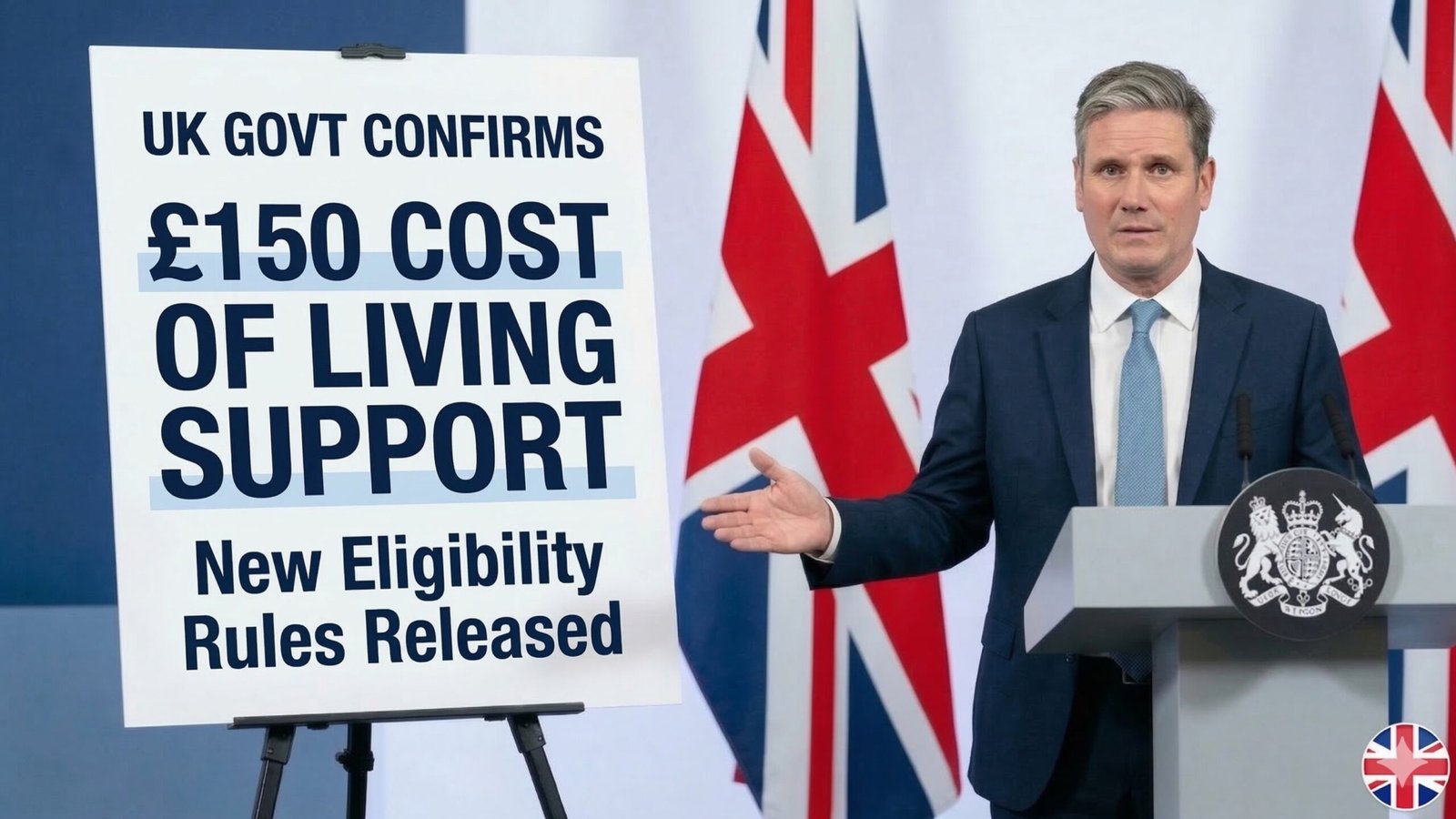
As the UK enters the spring of 2026, the financial pressure on households remains a central topic of conversation. While inflation has stabilized compared to the peaks of recent years, the everyday cost of essentials—from energy to groceries—continues to stretch monthly budgets. In response, the UK government has confirmed a new wave of £150 Cost of Living support, targeted specifically at those who need it most.
This £150 payment is not a universal handout. Instead, it is a highly targeted measure designed to assist vulnerable groups, particularly those living with disabilities and households on low-income benefits. Understanding the new eligibility rules is crucial, as the criteria have become more refined to ensure the support reaches the right people at the right time.
The Return of Targeted Disability Support
The headline feature of this announcement is the £150 Disability Cost of Living Payment. For many, this will feel familiar, as similar payments were issued during the height of the energy crisis. However, the 2026 rollout comes with updated “snapshot” dates and specific requirements that claimants must meet to qualify.
The government recognizes that individuals with disabilities often face higher unavoidable costs. This includes the need for specialized medical equipment, higher heating requirements to manage health conditions, and increased transport costs. By providing a flat £150 payment, the Department for Work and Pensions (DWP) aims to alleviate some of the “inflationary lag” that often hits those on fixed disability benefits harder than the general population.
Qualifying Benefits for the £150 Payment
To receive the £150 payment, you must be in receipt of a specific disability benefit. It is important to note that the payment is made per individual, not per household. This means if two people living in the same house both receive a qualifying benefit, the household will receive a total of £300.
The primary qualifying benefits for the 2026 support include:
-
Personal Independence Payment (PIP)
-
Disability Living Allowance (DLA)
-
Attendance Allowance
-
Constant Attendance Allowance
-
Adult Disability Payment (for those living in Scotland)
-
Armed Forces Independence Payment
-
War Pension Mobility Supplement
If you receive one of these benefits and were entitled to a payment during the government’s specified “qualifying window” in early 2026, the £150 should be paid to you automatically.
The Importance of the Qualifying Date
The most common reason people miss out on these payments is failing to meet the Qualifying Date rule. HMRC and the DWP use a “snapshot” in time to determine who is eligible. If your claim for a disability benefit was active, or if you had a successful claim that was backdated to cover this period, you will be included in the rollout.
If you are currently in the middle of an appeal or a new application, don’t panic. If your application is eventually successful and the start date of your claim falls before the qualifying deadline, the £150 payment will be issued to you retroactively once your main benefit is approved. It is always worth keeping a record of your application dates for this reason.
How the Payment Is Issued
One of the best aspects of this support is that it is automatic. There is no need to apply, fill out complex forms, or call a helpline to “claim” your money. If you meet the criteria, the £150 will be sent directly to the bank account where you receive your usual benefits.
The payment will appear as a separate entry on your bank statement, often with a reference like “DWP COL” or “HMRC PS.” Be wary of any text messages or emails asking you to “apply” for this payment by clicking a link. These are almost certainly scams. The government will never ask for your bank details via text for a cost-of-living payment.
The £150 Warm Home Discount Extension
While the disability payment is one form of support, the government has also confirmed the extension of the Warm Home Discount into the 2026/27 winter season. This is a separate £150 rebate that is applied directly to your electricity bill rather than being paid as cash into your bank.
For many pensioners and low-income families, this creates a “double layer” of support. If you are eligible for both the disability payment and the Warm Home Discount, you could see a total benefit of £300 over the course of the year. The eligibility for the Warm Home Discount has been expanded to include more households in Scotland, bringing them in line with the automatic system used in England and Wales.
Support for Low-Income Pensioners
Pensioners remain a high priority in the 2026 support package. While the £150 disability payment is available to those of all ages who qualify, many retirees will also benefit from the Winter Fuel Payment and the Pension Credit top-ups.
If you are over the State Pension age and have a low weekly income, checking your eligibility for Pension Credit is the most important step you can take. Pension Credit acts as a “passport” to other support. For instance, being on Pension Credit often makes you automatically eligible for the £150 Warm Home Discount and other local authority grants that can help with the cost of food and essentials.
The Role of Local Council Support
Not everyone fits perfectly into the DWP’s benefit categories. For those who are struggling but don’t receive disability benefits or Pension Credit, the government has replenished the Household Support Fund.
This fund is distributed to local councils across the UK, who then decide how to spend it based on the needs of their specific community. In many areas, this involves issuing vouchers for supermarkets, help with water bills, or emergency “crisis” payments. If you find yourself in financial distress but don’t qualify for the national £150 payment, your local council’s “Cost of Living” portal should be your first port of call.
Energy Bill Reductions for 2026
Beyond the direct cash payments, the UK government has announced a strategic move to lower the “standing charges” on energy bills. Starting in April 2026, the goal is to take an average of £150 off the annual costs for all households by reforming how energy companies bill for infrastructure.
While this isn’t a check in the mail, it represents a permanent reduction in the cost of living for every household in the country. When combined with the targeted £150 disability payments and the Warm Home Discount, the most vulnerable households could see their total annual energy-related costs reduced by up to £450 compared to previous years.
Scams and Security: Staying Safe
Whenever the government announces a “£150 Payment,” scammers immediately go to work. They send out thousands of text messages claiming that you need to “verify your identity” or “provide bank details” to receive your Cost of Living support.
Remember:
-
The DWP and HMRC already have your details if you are on benefits.
-
Payments are automatic.
-
You will never be asked for your PIN or password.
-
Official letters will usually arrive by post before the payment is made.
If you receive a suspicious text, you can report it by forwarding it to 7726, the free national reporting service. Stay vigilant so that your support money stays in your pocket.
Planning Your 2026 Budget
While the £150 payment is a welcome boost, it is a one-off payment designed to help with immediate pressures. Financial experts suggest using these “windfall” payments to cover one-off costs—like a bulk grocery shop, an annual insurance premium, or a small debt—rather than relying on them for day-to-day living.
With the State Pension also rising by 4.8% in April 2026, many retirees will find their monthly income increasing alongside this support. Balancing these increases against the rising cost of services is the key to maintaining financial stability throughout the year.
Final Thoughts on the 2026 Support Package
The confirmation of the £150 Cost of Living support for 2026 shows that the government is moving toward a more “surgical” approach to welfare. Rather than broad payments for everyone, the focus is now firmly on those with the highest unavoidable costs—specifically the disabled and the elderly on low incomes.
By keeping an eye on your bank statements and ensuring your benefit information is up to date with the DWP, you can ensure that you receive every penny you are entitled to. This support, while modest, serves as a vital safety net in a world where the cost of living continues to be a daily challenge.