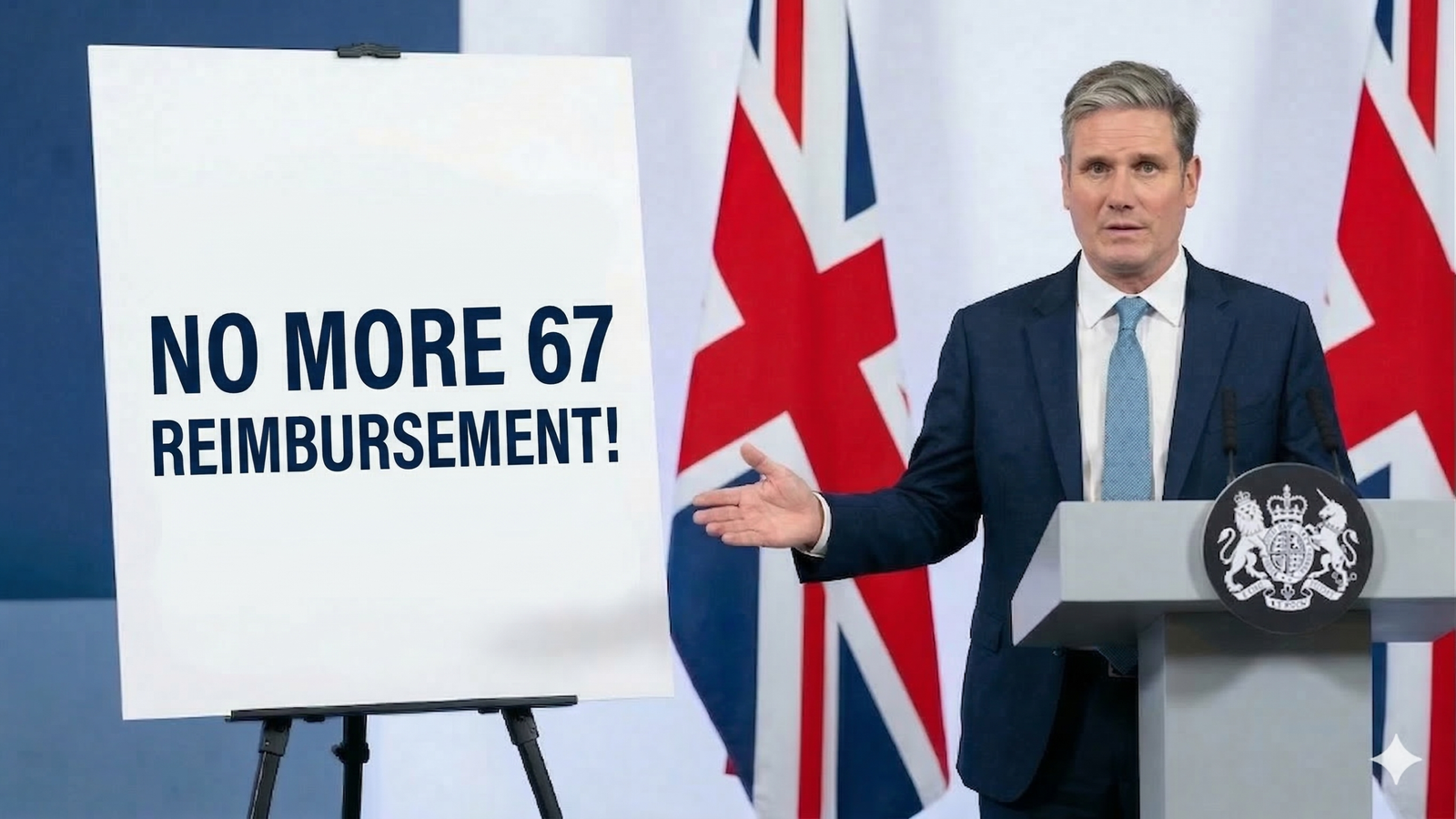
The landscape of retirement in the United Kingdom has shifted once again. In a landmark move this March 2026, the Department for Work and Pensions (DWP) has officially confirmed the conclusion of the “67 Rule” transition, marking a definitive update to the State Pension age. For millions of workers currently in their 50s and 60s, this announcement is the final word on a long-standing debate regarding when they can finally hang up their hats and claim their hard-earned government pension.
Understanding these changes is not just about knowing a date on a calendar; it is about financial survival. As the cost of living continues to fluctuate, knowing exactly when your State Pension kicks in allows for better private pension planning and long-term budgeting. This 2026 update settles the uncertainty that has been hovering over the British workforce for the last few years.
The End of the 67 Rule Explained
To understand why this is a headline-grabbing moment, we first have to look at what the “67 Rule” actually was. For a long time, the plan was to gradually transition the State Pension age from 66 to 67 between the years 2026 and 2028. However, following extensive reviews into life expectancy and fiscal responsibility, the government has officially approved the finalized timetable.
Ending the rule means that the “phasing-in” period has reached its conclusion. The ambiguity of “somewhere between 66 and 67” is gone. The new approved age is now a hard line for specific birth cohorts. This clarity is designed to help the DWP manage its budget while giving citizens a concrete target for their retirement goals.
Who is Affected by the 2026 Update
The most immediate impact will be felt by those born in the late 1950s and early 1960s. If you were approaching your 66th birthday expecting an immediate payout, you must verify your specific qualifying date under the new 2026 guidelines. The government has released a refined “Pension Calculator” on the GOV.UK website to handle the surge in inquiries.
It is a common misconception that everyone’s retirement age has jumped overnight. In reality, this is a structured adjustment. However, the “Official Approval” status granted this March means there will be no further delays or “triple lock” adjustments that would push these dates back further for the current qualifying group.
Life Expectancy and the Pension Gap
The driving force behind the 2026 policy change is the shifting demographic of the UK. People are living longer than they were when the State Pension was first established. While that is good news for our health, it creates a “Pension Gap”—a massive deficit in the government’s ability to fund retirements that could last 30 or 40 years.
By moving the age to 67 and solidifying the 2026 rules, the Treasury hopes to save billions of pounds. For the individual, however, it means an extra year of work or relying on private savings. This gap is why many financial advisors in London and Manchester are now urging clients to look at “Bridge Pensions” to cover the months between stopping work and the State Pension starting.
Impact on National Insurance Contributions
Your State Pension isn’t just given to you; you earn it through National Insurance (NI) contributions. Under the new 2026 rules, the requirement for a “Full” State Pension remains at 35 qualifying years. However, because the age has reached 67 for many, workers now have an extra year to fill any “gaps” in their record.
If you find yourself short of the 35-year mark, the 2026 transition period offers a unique window to pay voluntary Class 3 NI contributions. With the age now officially approved at 67, checking your NI record has never been more critical. Missing even one year could result in a significant loss of weekly income during your retirement.
The Role of the Triple Lock in 2026
Despite the age increase, the government has reaffirmed its commitment to the “Triple Lock.” This ensures that the State Pension increases every year by whichever is highest: inflation, average earnings growth, or 2.5%. With the age now set at 67, the Triple Lock becomes the primary tool to ensure that retirees don’t fall into poverty.
As we move through 2026, the pension amount is expected to see a significant uplift to match the high wage growth seen in the previous year. For those hitting the new age of 67 this month, the starting rate of the New State Pension is more substantial than it was for those who retired at 66 just two years ago.
Workplace Pensions and the 2026 Shift
With the State Pension age officially rising, workplace pensions are becoming the “primary” income for many. The age at which you can access your private or workplace pension (currently 55, moving to 57 in 2028) is also a factor to consider. The March 2026 announcement has triggered many employers to review their “Automatic Enrolment” contributions.
If you are planning to retire at 60, you now have a seven-year gap to fill before the government starts paying you. This 2026 rule change is a wake-up call for younger workers to increase their voluntary contributions now, rather than relying solely on the state later in life.
Public Sector Pension Adjustments
Teachers, NHS workers, and civil servants are also feeling the ripple effects of the March 2026 approval. Most public sector pension schemes are linked directly to the State Pension age. This means that as the DWP pushes the age to 67, the “Normal Pension Age” for nurses and teachers follows suit.
There has been significant pushback from unions, but the 2026 approval remains final. Public sector workers are encouraged to check their specific scheme portals, as some may have “protected age” clauses that allow them to retire earlier without the heavy penalties usually associated with early draw-downs.
How to Claim Your Pension in 2026
The process of claiming your pension has also been modernized alongside the age change. You do not get your pension automatically; you must claim it. The DWP usually sends a letter four months before you reach the new qualifying age. However, with the 2026 digital shift, many of these invitations are now being sent via the “Personal Tax Account” online.
If you haven’t received a letter and you are nearing 67, you can claim online through the GOV.UK service. This is the fastest method and ensures that your first payment arrives within the first month of your eligibility. Delaying your claim can lead to back-payment issues, so “Act Before Late” is the motto for this year.
Can You Still Retire at 60
Technically, you can retire whenever you want, provided you have the funds to support yourself. The March 2026 rule only dictates when the Government starts paying you. Many UK residents are opting for “Phased Retirement”—reducing their hours at 60 and using private savings to supplement their income until the State Pension kicks in at 67.
This “phased” approach is becoming the new norm in the UK. It reduces the physical and mental strain of full-time work while ensuring that you don’t deplete your private nest egg too quickly before the state safety net becomes available.
Health and Capability Assessments
One of the biggest concerns with the 67 rule is for those in manual labor jobs. Can a construction worker or a manual laborer really work until 67? The 2026 update includes provisions for “Mid-life MOTs,” where the government provides free career and health checks for those in their 40s and 50s.
These MOTs are designed to help workers transition into less physically demanding roles as they age. If health issues prevent you from working until 67, you may be eligible for statutory sick pay or Employment and Support Allowance (ESA) until you reach the official pension age.
The Future of the Pension Age
While 67 is the new standard officially approved this month, the conversation doesn’t end here. There are already independent reports suggesting that the age may need to rise to 68 or even 69 by the 2040s. The March 2026 announcement is a milestone, but it is part of a much larger, ongoing adjustment to the UK’s economic reality.
For now, the certainty of the 67 rule provides a much-needed foundation for financial planning. It allows the current generation of retirees to know exactly where they stand.
Managing Your Retirement Budget
With the state pension age fixed at 67, your budget needs to be more precise than ever. Consider the following steps to prepare:
-
Request a State Pension Forecast: Use the “Check your State Pension” service on GOV.UK to see how much you will get.
-
Consolidate Old Pensions: If you have had multiple jobs, find and combine your old pension pots to reduce management fees.
-
Downsize Early: Many in the UK are choosing to downsize their homes at 60 to unlock equity, providing the “bridge” money needed to reach age 67.
Final Thoughts for UK Workers
The official approval of the new State Pension age in March 2026 marks the end of an era of uncertainty. While working until 67 may not be the news everyone wanted to hear, having a finalized, approved date allows for honest and effective financial planning. The “67 Rule” is now the law of the land, and the best way to navigate it is to stay informed, check your NI contributions, and ensure your private savings are working as hard as you are.