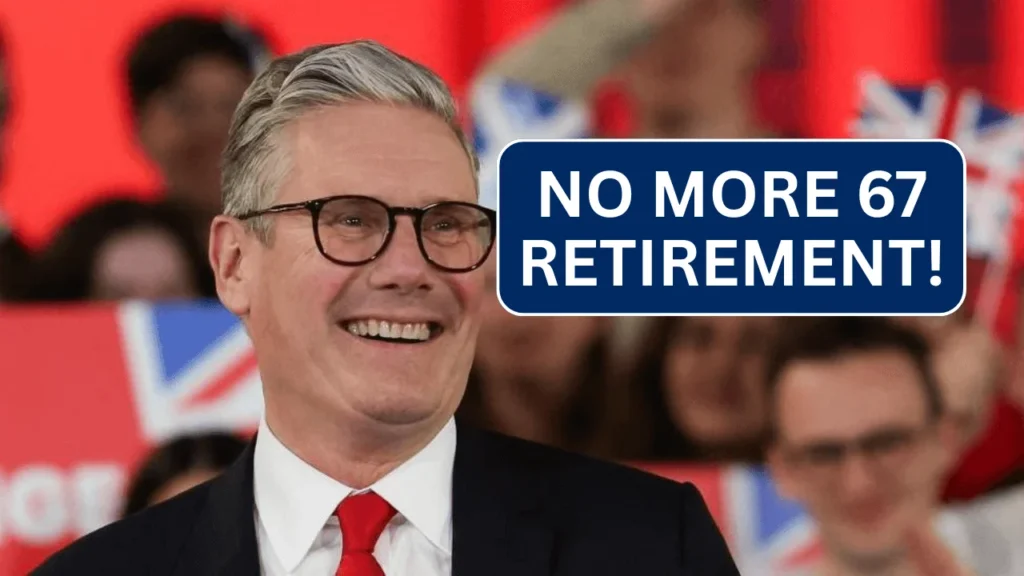
The landscape of retirement in the United Kingdom is undergoing a seismic shift. For decades, the dream of hanging up the work boots at 60 or 65 was the gold standard. However, as 2026 approaches, the UK government has solidified plans that essentially say “goodbye” to the traditional retirement timelines many had hoped for. With the approval of the new State Pension age schedule, millions of workers across England, Scotland, Wales, and Northern Ireland are now facing a longer journey to their first pension check.
Understanding the 2026 Transition
The core of the current update lies in the transition from age 66 to 67. Under the approved legislation, the State Pension age will increase in stages starting in April 2026. This isn’t just a proposal anymore; it is a legislated reality that affects anyone born after April 1960. By the time we reach 2028, the standard age to claim the State Pension will be 67 across the board.
For those currently in their early 60s, this means the goalposts have moved just as they were getting within sight of the finish line. This change is driven by what the Department for Work and Pensions (DWP) calls “intergenerational fairness” and the undeniable pressure of an aging population on the public purse.
Why the Age Is Rising
The UK government points to one primary factor for these changes: life expectancy. Although recent data suggests that the rapid rise in life expectancy has slowed down, the overall trend over the last 50 years shows that people are living much longer than they did when the State Pension was first introduced.
Maintaining a system where a third of a person’s adult life is spent in retirement is becoming increasingly expensive. The government argues that to keep the “Triple Lock” (the guarantee that pensions rise by inflation, wages, or 2.5%) sustainable, the age at which people start drawing that money must inevitably go up.
The Looming Jump to Age 68
While the headlines are currently focused on the move to 67, there is a much larger cloud on the horizon: the increase to 68. Current laws have this scheduled for between 2044 and 2046. However, recent government reviews have sparked intense debate about bringing this date forward to the late 2030s.
For younger workers—those in their 20s, 30s, and 40s—the “Goodbye to 67” headline might eventually mean they won’t see a penny of their State Pension until they are nearly 70. The government has committed to a “ten-year notice” period for any changes to the age 68 timeline, but the message is clear: the age is only going in one direction.
Impact on Manual Labor Workers
One of the most significant criticisms of the new rules is the impact on those in physically demanding jobs. While a white-collar office worker might find it feasible to work until 67 or 68, a construction worker, nurse, or delivery driver may find their body giving out long before they reach the official retirement age.
There are currently no “occupational exceptions” in the State Pension system. This means regardless of whether you have spent 40 years on a building site or 40 years behind a desk, the age at which you can claim is the same. This has led to calls for a more flexible pension system that accounts for the “healthy life expectancy” of different regions and professions.
Regional Disparities in Retirement
Data from the Office for National Statistics (ONS) shows a stark reality: healthy life expectancy varies wildly across the UK. In some affluent parts of the South East, people can expect to remain healthy well into their 70s. In contrast, in some parts of Glasgow or Blackpool, healthy life expectancy can be as low as 55.
By pushing the State Pension age to 67 and eventually 68, the government risks a situation where many people in deprived areas will spend their final years in ill health or even pass away before they ever qualify for the pension they paid into for their entire lives. This “postcode lottery” remains one of the most contentious aspects of the 2026 rules.
The Role of Private Pensions
With the State Pension age receding, the importance of private and workplace pensions has never been higher. The “Auto-Enrolment” scheme, which automatically enrolls employees into a workplace pension, has been a success in getting more people to save. However, experts warn that the minimum contribution levels (currently 8%) are likely not enough to sustain a comfortable lifestyle if the State Pension is delayed.
Many people are now looking at “FIRE” (Financial Independence, Retire Early) strategies to bridge the gap between when they want to stop working and when the government will actually start paying them. If you want to retire at 60, you now need a private pot large enough to cover at least seven or eight years of living costs before the State Pension kicks in.
Gender Inequality in the New System
The equalization of the pension age at 66, and now the move to 67, has had a disproportionate effect on women. In the past, women could retire at 60. The rapid acceleration of the pension age left many women, particularly those born in the 1950s (often referred to as the WASPI women), with little time to adjust their financial plans.
As we move toward age 67 in 2026, the government is keen to avoid another “WASPI-style” backlash. This is why the 2026–2028 transition has been communicated so far in advance. However, the financial reality remains that women, who often have smaller pension pots due to career breaks for childcare, are still more vulnerable to these age increases.
Benefit Changes for Those Under 67
The rise in the pension age doesn’t just affect the pension itself; it also affects other benefits. For example, Pension Credit, which provides extra money for low-income pensioners, is also tied to the State Pension age.
If you are struggling to find work in your mid-60s but aren’t yet old enough for your pension, you may find yourself stuck on Universal Credit. The standard allowance for Universal Credit is significantly lower than the State Pension, creating a “pension gap” that can lead to increased poverty among the 60–67 age group.
How to Check Your Retirement Date
Given the complexity of the phased rollout between 2026 and 2028, it is essential to check exactly when you will be eligible. The easiest way to do this is through the official GOV.UK “Check your State Pension age” tool.
By entering your date of birth, the tool will provide you with the exact date you can claim. It will also show you a forecast of how much you are likely to receive based on your National Insurance contributions. Remember, you generally need 35 qualifying years of contributions to get the full new State Pension.
Working Longer: The New Normal?
The government is actively encouraging ” Fuller Working Lives.” This initiative aims to help older workers stay in the workforce longer through flexible working, retraining, and addressing ageism in recruitment.
While some enjoy the social and mental benefits of working longer, for many, it is a necessity rather than a choice. The 2026 rules are a firm nudge from the state, signaling that the era of early retirement supported by the government is effectively over.
Planning Your Exit Strategy
If you are aiming to “beat” the system and retire before the new age of 67, planning must start immediately. This involves:
-
Maxing out ISA contributions: Since ISAs are tax-free and can be accessed at any age, they are the perfect tool for bridging the gap.
-
Reviewing National Insurance: Check for any gaps in your record. You can often pay voluntary contributions to fill gaps and ensure you get the maximum pension amount.
-
Downsizing: Many UK homeowners are looking at their property as their secondary pension. Selling a larger family home to move into something smaller can free up the cash needed to retire at 64 or 65.
Conclusion: A New Era of Retirement
The approved increase to the State Pension age is a landmark moment in UK social policy. It reflects a nation that is living longer but struggling to pay for it. As we say goodbye to the prospect of retiring at 67 for future generations, the burden of responsibility has shifted from the state to the individual.
Staying informed and being proactive with your savings is no longer just “good advice”—it is a survival strategy for the new economic reality of the 2020s and beyond. The government has made its move; now, it’s up to every UK worker to make theirs.