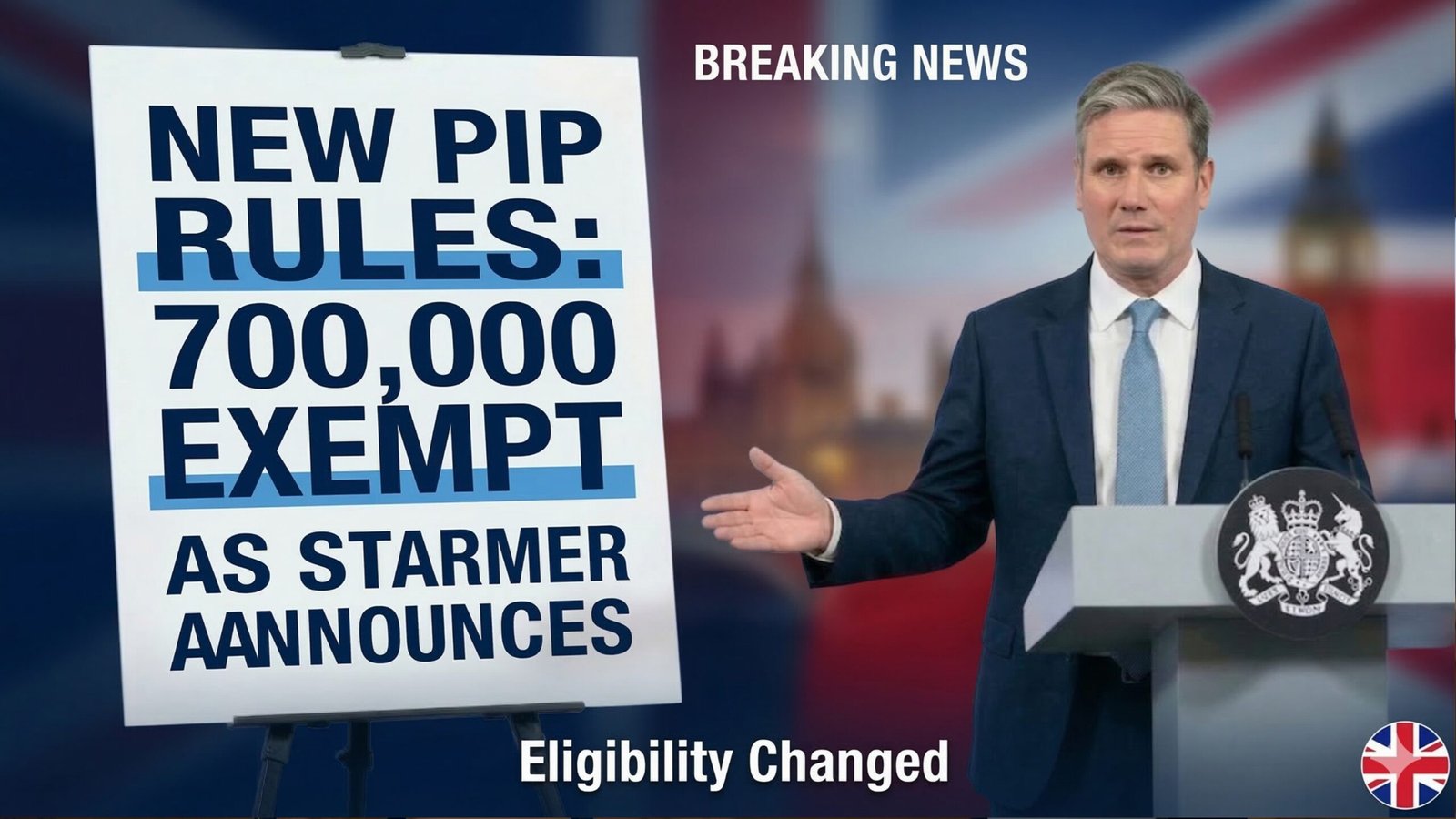
The landscape of disability benefits in the UK is undergoing its most significant transformation in a generation. Prime Minister Keir Starmer has recently unveiled a sweeping set of reforms to Personal Independence Payment (PIP), a move that has sent ripples of both anxiety and relief across the country. At the heart of this announcement is a crucial figure: 700,000. This is the number of disabled people who will be officially exempt from some of the most rigorous new assessment criteria, providing a vital safety net for those with the most severe and permanent conditions.
For months, rumors of “vouchers instead of cash” and stricter medical reviews have dominated the headlines. However, the government’s latest clarification aims to strike a balance between reducing the soaring welfare bill and protecting the UK’s most vulnerable citizens. For those navigating the complexities of the Department for Work and Pensions (DWP), understanding where you stand in this new hierarchy of support is more important than ever.
The Reasoning Behind the PIP Overhaul
The push for reform stems from a stark reality in the UK’s post-pandemic economy. The number of people claiming PIP has reached record highs, with a particular surge in claims related to mental health and neurodivergent conditions. From the government’s perspective, the current system—designed over a decade ago—is no longer sustainable in its current form.
Keir Starmer’s administration has argued that the system needs to move away from a “one-size-fits-all” approach. The goal, according to Downing Street, is to ensure that support is targeted specifically at the extra costs associated with a disability, rather than acting as a general income supplement. This shift has led to the proposal of a multi-tiered system, where some claimants receive cash, some receive specialized services, and others are protected from the stress of constant reassessments.
Who Are the 700,000 Exempt Claimants
The headline figure of 700,000 refers to a specific group of people who will be placed in a “Protection Category.” These are individuals with conditions that are medically recognized as being lifelong, degenerative, or so severe that there is no realistic prospect of improvement.
For these 700,000 people, the government is promising an end to the “reassessment cycle.” Under the old rules, even those with permanent disabilities often faced a review every few years, a process many described as dehumanizing and anxiety-inducing. By exempting this group, the DWP aims to reduce administrative bloat and, more importantly, provide long-term peace of mind to those who need it most. This group typically includes individuals with advanced stages of multiple sclerosis, severe cerebral palsy, and terminal illnesses.
The Shift Toward a Targeted System
While the 700,000 are protected, the rules are tightening for many others. The government is exploring a move toward a “functional” assessment model. This means that instead of just looking at a medical diagnosis, the DWP will look more closely at how a condition affects someone’s ability to work and lead an independent life.
For some, this may mean that the traditional monthly cash payment is replaced or supplemented by direct access to treatments, equipment, or home adaptations. For example, rather than a monthly payment to help with mobility, a claimant might be fast-tracked for a high-end wheelchair or a specialized vehicle. The government argues this ensures the money is used exactly for what it was intended for, though disability advocates warn that this could strip away the autonomy and dignity of disabled people.
Mental Health and the New PIP Criteria
One of the most controversial aspects of the Starmer reforms is the treatment of mental health conditions. There has been a significant rise in PIP claims for anxiety and depression, and the new rules seek to differentiate between those needing clinical intervention and those needing financial support.
The DWP has suggested that for many people with “lesser” mental health challenges, the best form of support might be a direct link to NHS talking therapies or employment coaching rather than a cash benefit. This has sparked a fierce debate. While some agree that getting people back into the community is beneficial, others argue that the cash payment is a vital lifeline that helps pay for the very things that keep people stable—such as heating, transport to appointments, and specialized diets.
The End of the Voucher Controversy
Earlier proposals from the previous government regarding a “voucher system” caused widespread panic. Keir Starmer has moved to distance his administration from the idea of generic shopping vouchers. Instead, the new “targeted support” model is being framed as a clinical and social care integration.
The clarification that 700,000 people will be exempt from these changes is a direct response to the backlash. By ensuring that those with the highest needs remain on the existing cash-based system, the government is attempting to take the heat out of the voucher debate. However, for those not in the exempt category, the fear remains that “targeted support” is simply a euphemism for reducing the actual amount of money landing in their bank accounts.
How the New Assessments Will Work
For new claimants or those not in the exempt 700,000, the assessment process is set to become more data-driven. The DWP plans to integrate medical records more seamlessly into the PIP application process, theoretically reducing the need for face-to-face interviews.
While “paper-based reviews” sound more convenient, there are concerns about the accuracy of these automated systems. Critics point out that a GP’s notes might not fully capture the day-to-day struggle of living with a fluctuating condition like Crohn’s disease or Fibromyalgia. The human element of the assessment is being reduced to save costs, but for the claimant, this could lead to a higher rate of initial rejections and a subsequent surge in appeals and tribunals.
The Role of Local Authorities and the NHS
A key pillar of the Starmer plan is the devolution of some disability support to local councils and the NHS. The idea is that local experts know their communities better than a centralized DWP office in Blackpool or London.
Under the new rules, PIP may be “bundled” with social care packages. For the 700,000 exempt individuals, this could mean a more joined-up experience where their health, housing, and financial needs are handled by a single dedicated team. For others, however, it might lead to a “postcode lottery,” where the quality of support you receive depends entirely on where you live and the current state of your local council’s budget.
Protecting the Most Vulnerable in Society
The government’s decision to exempt 700,000 people is an admission that the previous system was often too harsh on those who could never get better. By “locking in” support for this group, the DWP is hoping to build a more compassionate image.
The Prime Minister has stated that “a civilised society is judged by how it treats its disabled citizens.” By creating this exempt category, the government is trying to prove that their goal isn’t just to cut costs, but to make the system more logical. However, the true test of this compassion will be how they treat the millions who fall just outside that 700,000-person threshold—those with invisible disabilities or conditions that flare up and subside unpredictably.
What Claimants Need to Do Now
If you are currently receiving PIP, the most important thing to remember is that these changes will not happen overnight. The transition to the new system is expected to take several years to fully implement. You do not need to contact the DWP immediately; they will reach out to you when your claim is up for review.
However, it is a good idea to ensure your medical records are up to date. If you believe your condition should qualify you for the “Protection Category,” start gathering evidence from your consultants and GPs now. Having a clear, medically backed history of your condition is the best defense against any potential changes to your award.
The Economic Impact of the PIP Changes
From a purely economic standpoint, the Starmer government is under immense pressure to fix the UK’s “worklessness” problem. There are currently millions of people of working age who are economically inactive due to long-term sickness.
The new PIP rules are designed to be a “carrot and stick” approach. The “stick” is a more rigorous assessment for some, while the “carrot” is the promise of better-integrated health support to help people back into the workforce. The hope is that by moving 700,000 people into a secure, exempt category, the government can focus all its “Back to Work” resources on the remaining claimant population.
Future Outlook for Disability Benefits
As we look toward the late 2020s, the PIP system will likely look very different from the one introduced in 2013. We are moving toward a more digital, more clinical, and more localized system.
While the exemption of 700,000 people is a positive step for those with the most severe conditions, the wider disability community remains cautious. The success of these reforms will depend on whether the “targeted support” actually helps people or if it is simply a way to manage a shrinking budget. For now, the focus remains on the implementation of these rules and ensuring that no one is left behind in the transition.
Final Thoughts for UK Households
Navigating the DWP can feel like a full-time job in itself. The announcement of these new PIP rules and the 700,000 exemptions is just the beginning of a long journey of reform. If you or a loved one are affected, stay informed, keep your documentation organized, and remember that there are advocacy groups and charities ready to help you navigate the appeals process if necessary.
The UK’s commitment to its disabled citizens is being redefined. Whether this new version of PIP will be a more efficient, fairer system or a more restrictive one remains to be seen, but the protection of the most vulnerable 700,000 is at least a signal of where the government’s priorities currently lie.
Would you like me to help you find a list of the specific conditions that are most likely to fall into the 700,000 exempt category?